
PitchBook has long been the go-to solution for private markets research, but its legacy architecture and manual data entry create friction for corporate development teams that need to move quickly. A new generation of AI-native platforms is reimagining how deal professionals discover, enrich, and qualify targets—automating workflows that PitchBook still requires teams to handle manually. If you're evaluating alternatives that leverage semantic search, automated enrichment, and continuous monitoring to accelerate your pipeline, these seven platforms deserve your attention.
1. AlphaLens Intelligence – Discovery to CRM, Automated
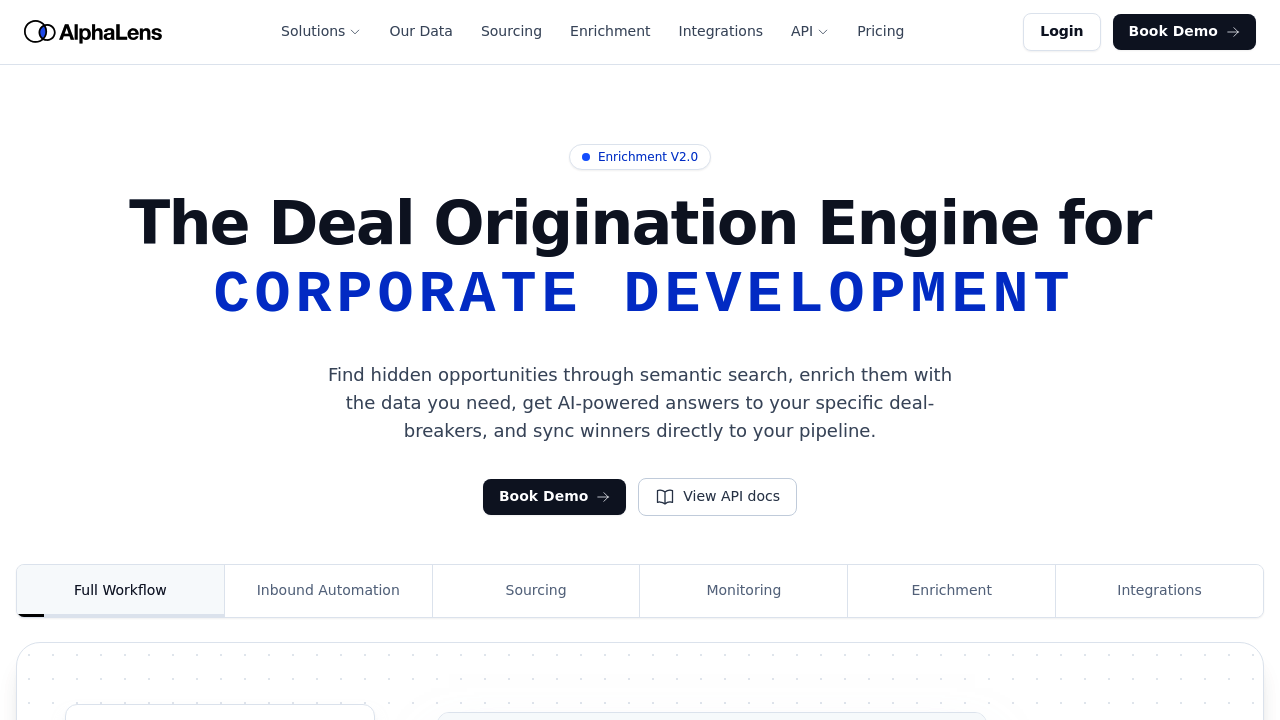
AlphaLens Intelligence stands out as an end-to-end AI-powered deal origination and enrichment platform purpose-built for corporate development, private equity, and investment banking teams. Unlike traditional databases, AlphaLens combines semantic search, automated inbound document processing, and AI-driven enrichment into a single workflow from discovery to CRM integration.
Core differentiators include natural language "search by thesis, not keywords" across product-level descriptions and ICP definitions, an Active Radar monitoring system that continuously alerts you when new companies match your criteria, and Universal Ingestion that converts pitch decks and shared links into structured data via OCR and AI question-answering. The platform's enrichment pipeline goes beyond firmographics to include product arrays, pricing intelligence, compliance data (e.g., SOC2 status), growth signals, and people data—all auto-synced with conditional field mapping to Salesforce, HubSpot, Attio, and Affinity.
Best For: Corporate development teams that need to scale outbound pipeline creation without adding headcount, especially those with complex thesis-driven sourcing or high inbound deck volume.
2. Grata – AI-Powered Private Market Search for M&A
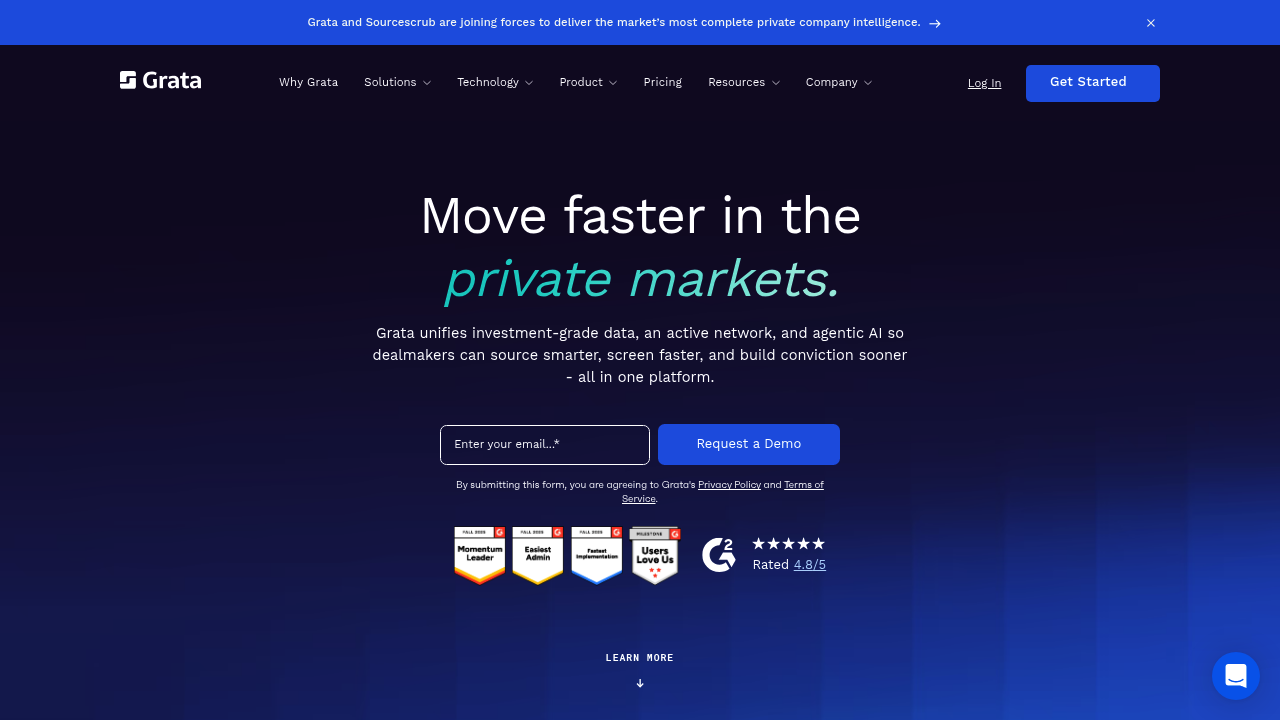
Grata has positioned itself as the leading private markets platform for deal sourcing, using deep-learning-powered search to map the middle market and uncover private, bootstrapped, and founder-owned companies that traditional databases often miss. Grata's proprietary data engine continuously crawls company websites to extract self-described product and service descriptions, enabling users to find targets based on what companies actually do, not just their assigned industry codes.
The platform emphasizes comprehensive private company fundamentals, transaction data, contact intelligence, and pipeline management tools, all integrated into CRMs like Affinity and Salesforce. Grata has built trust signals with G2 ratings and enterprise customer logos across private equity, investment banking, and corporate development use cases.
Best For: M&A teams focused on middle-market sourcing and firms seeking granular control over search filters to identify niche, founder-led businesses that aren't on the typical banker radar.
3. Comparables.ai – AI-Driven Valuation and M&A Intelligence
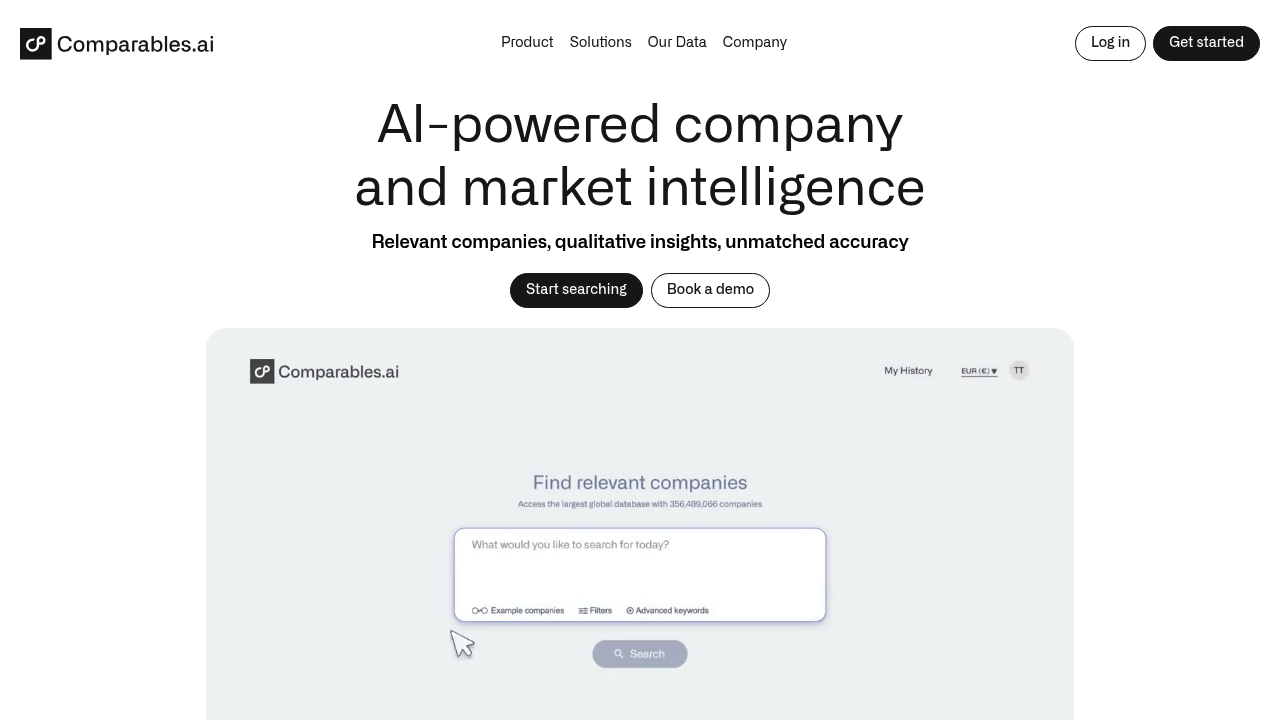
Comparables.ai delivers AI-powered company and market intelligence with a heavy focus on M&A screening, benchmarking, and valuation workflows. The platform claims coverage of over 360 million companies and features AI tools like AI Screener, AI Column, and AI Analyst to accelerate target analysis and valuation multiples research.
The platform's strength lies in its structured data on private company financials, ownership structures, and trading multiples, combined with performance claims of 10.5x faster screening and 66% cost savings versus traditional solutions. Comparables.ai provides a freemium model and a premium feature matrix that appeals to investment banking, private equity, and corporate finance teams seeking faster comp analysis.
Best For: Deal professionals in investment banking and PE who need rapid access to private company financials and valuation comps, particularly teams prioritizing speed of screening over depth of qualitative research.
4. Hebbia AI – Enterprise AI for Finance and Diligence
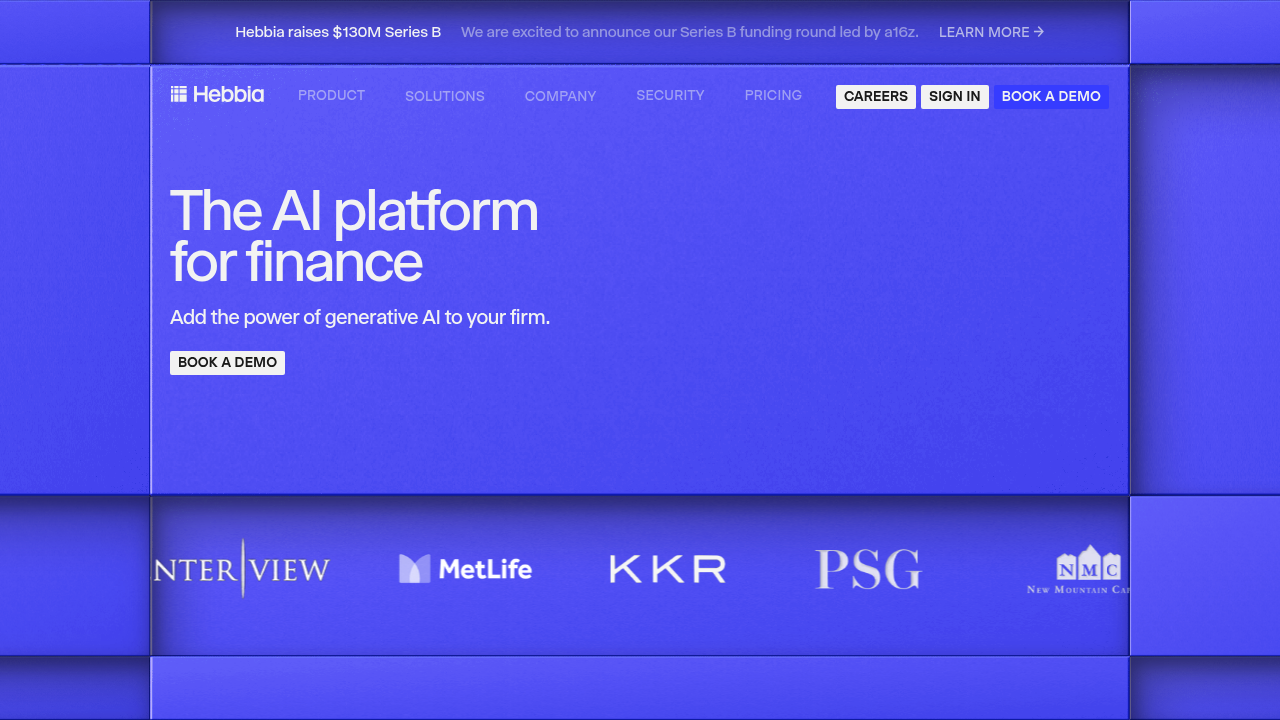
Hebbia positions itself as "the AI platform for finance," leveraging generative AI to extract, compare, and analyze structured and unstructured data across deal documents, regulatory filings, and market research. Hebbia's use-case library highlights over 1,000 possible workflows across asset management, private equity, credit, and legal verticals.
Backed by a16z and used by enterprise customers including MetLife and KKR, Hebbia emphasizes measurable benefit claims like "5x faster" analysis and "95% faster contract analysis." While it offers a visual UI and mocked-up deal-point extraction tables, the platform's value lies more in diligence automation and document intelligence than origination sourcing.
Best For: Finance and legal teams needing to process large volumes of documents during diligence, especially firms seeking generative AI for extracting deal terms and benchmarking provisions at scale.
5. Harmonic – Early-Stage Startup Discovery Engine
Harmonic is the startup discovery engine trusted by hundreds of venture teams, including a16z, Accel, and Bloomberg Beta. With real-time tracking of over 35 million companies and 195 million professional profiles, Harmonic excels at surfacing early-stage opportunities before they hit major funding milestones.
Its AI agent "Scout" allows investors to map markets, evaluate momentum, and draft outreach with natural language prompts. Harmonic's strengths include granular filters on hiring velocity, founder backgrounds, and team composition, plus automated alerts when companies become actionable. The platform integrates directly with Affinity CRM and provides a Chrome extension for in-context research.
Best For: Venture capital and growth equity teams that prioritize early-stage deal flow and want to monitor emerging talent and founder movements rather than established mid-market companies.
6. Sourcescrub – Sources-First Deal Sourcing Platform
Sourcescrub takes a "sources-first" approach, continuously crawling over 290,000 sources—including trade shows, directories, and conferences—to track 17+ million private companies. Its AI-powered tools like SourcingGPT and "Similar Companies" help dealmakers accelerate market mapping and target discovery.
Sourcescrub is designed for high-volume prospecting and emphasizes founder-owned and bootstrapped companies. The platform provides 24-hour list processing and on-demand data operations support, making it particularly attractive to middle-market M&A and business development teams.
Best For: PE and corporate development teams that focus on middle-market and founder-owned businesses, especially those needing custom list-building and conference-sourced intelligence.
7. DealPotential – Predictive AI for Private-Market Discovery
DealPotential provides predictive AI signals that help investors identify likely fundraising candidates 2–8 months in advance based on growth momentum. The platform positions itself as a smarter, cleaner alternative to PitchBook for investors seeking faster insights and proactive deal discovery.
DealPotential's focus is on identifying inflection points and actionable moments—companies showing hiring spikes, website traffic growth, or other traction indicators—before they formally enter a fundraising process. This forward-looking intelligence makes it particularly valuable for teams pursuing off-market or proprietary deal flow.
Best For: Investors and corporate development teams that want predictive signals for early outreach, particularly those focused on growth-stage companies in active fundraising cycles.
Why AI-Native Platforms Are Displacing Legacy Solutions
The shift from traditional databases like PitchBook to AI-native alternatives is driven by three core needs: speed, automation, and thesis-driven discovery. Legacy platforms rely on manual data entry, static industry tags, and keyword-only search—forcing deal teams to spend more time compiling lists than engaging targets. AI-native platforms use natural language processing, semantic understanding, and continuous web crawling to surface opportunities that match investment theses, not just taxonomies.
Modern deal teams also demand workflow automation: from pitch deck ingestion and enrichment to CRM syncing and monitoring alerts. Platforms like AlphaLens embed these capabilities natively, allowing teams to move from discovery to CRM-ready record in minutes rather than weeks. The result is higher pipeline velocity, lower research overhead, and proprietary deal flow that competitors using static databases will miss.
Whether you're a corporate development lead sourcing acquisition targets, a private equity team building a thesis-driven pipeline, or a venture firm tracking early-stage breakouts, the AI-native alternatives above offer materially faster, more intelligent workflows than PitchBook's legacy architecture allows.